
pH of Water Test: Method and Acceptable Range for Concrete
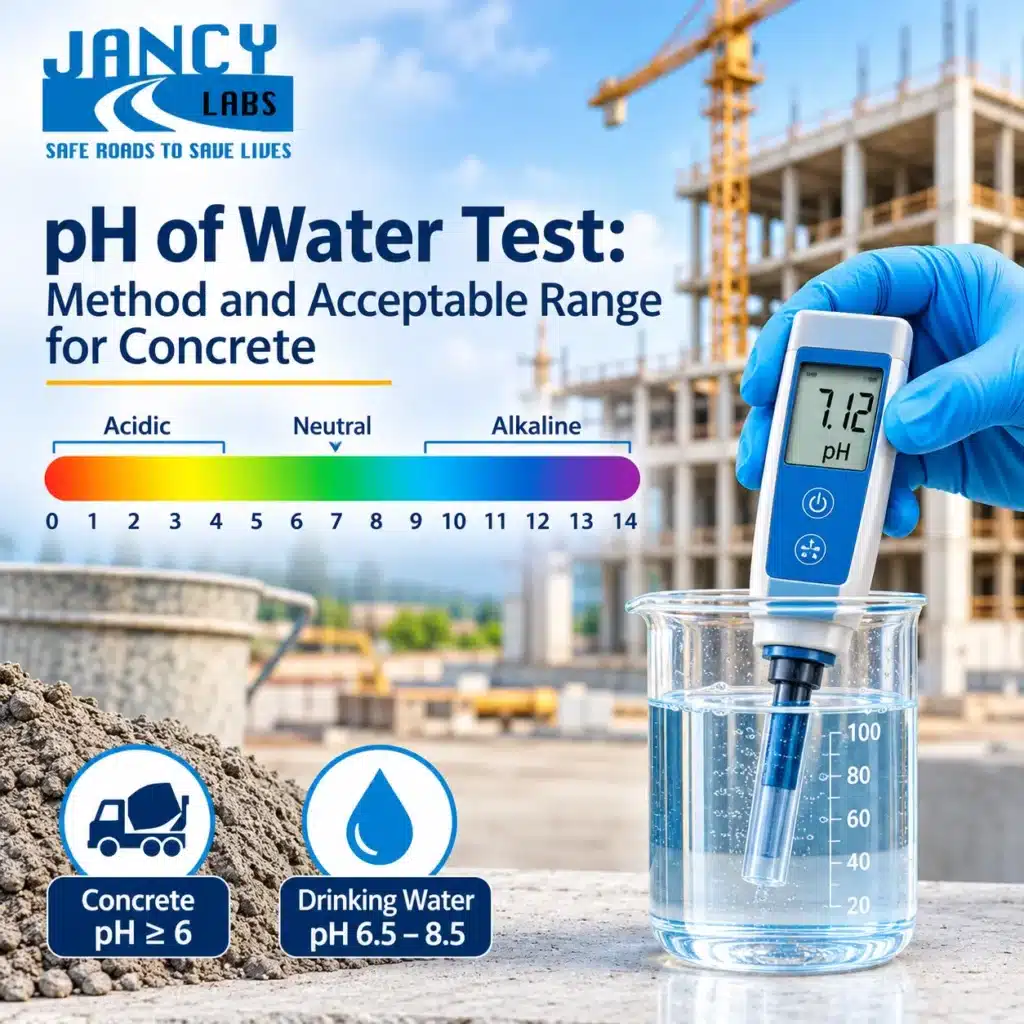
A pH of water test shows whether water is acidic, neutral or alkaline on a scale of 0 to 14. For concrete, the result matters: IS 456:2000 rejects mixing water with a pH below 6. Drinking water, by contrast, must sit between 6.5 and 8.5. This guide explains both ranges, the IS 3025 (Part 11) method, and why pH alone does not clear water for construction.
Key Takeaways
- IS 456:2000 Clause 5.4 requires mixing water for concrete to have a pH of not less than 6.
- IS 10500:2012 sets an acceptable pH range of 6.5 to 8.5 for drinking water, with no relaxation.
- Pure water has a pH of 7.0 at 25°C, but distilled water left open to air often reads close to 5.6.
- IS 3025 (Part 11):2022 is the Indian test method, using a calibrated pH meter and glass electrode.
- A pass on pH is not enough, because IS 456 also checks acidity, alkalinity, chlorides, sulphates, setting time and strength.
What Does a pH of Water Test Measure?
A pH of water test measures how acidic or alkaline water is. The scale runs from 0 to 14: values below 7 are acidic, 7 is neutral and values above 7 are alkaline.
The scale is also logarithmic, so each step is a tenfold change. For example, water at pH 5 is ten times more acidic than water at pH 6.
pH Value for Pure Water
Pure water has a pH of 7.0 at 25°C. In practice, though, distilled water absorbs carbon dioxide from the air, which forms a weak acid. So an open beaker of distilled water often reads around 5.6. For this reason, labs test samples quickly and keep bottles full and sealed.
Acceptable pH Range: Concrete vs Drinking Water
Concrete needs only a minimum pH, while drinking water has both a floor and a ceiling.
pH Limits at a Glance
Use. | Required pH. | Standard. |
Concrete mixing water. | Not less than 6. | IS 456:2000, Clause 5.4. |
Concrete curing water. | Water that passes for mixing is also fit for curing. | IS 456:2000, Clause 5.4. |
Drinking water. | 6.5 to 8.5, with no relaxation. | IS 10500:2012. |
Pure water at 25°C. | 7.0. | Theoretical value. |
So what is the best pH level for drinking water? IS 10500:2012 does not name a single best value; any reading from 6.5 to 8.5 is acceptable. Below 6.5, water can corrode pipes, while above 8.5 it tends to taste bitter and form scale.
How to Do a pH of Water Test as per IS 3025 (Part 11)
The current method is IS 3025 (Part 11):2022, published by the Bureau of Indian Standards. It is identical to ISO 10523:2008 and uses a pH meter with a glass electrode. pH paper is fine for a rough site check, but it is too coarse for an acceptance report. The test follows five steps:
- Collect the sample: Rinse a clean bottle with the water, fill it to the brim and cap it. Test soon, because pH drifts as the sample gains or loses carbon dioxide.
- Calibrate the meter: Calibrate with at least two buffer solutions that bracket the expected reading, such as pH 4.01 and pH 9.18 at 25°C.
- Rinse the electrode: Rinse the electrode with distilled water, then with a little of the sample.
- Set the temperature: Measure the sample temperature and set the meter’s temperature compensation.
- Read and record: Dip the electrode, wait for a steady reading, then record the pH to one decimal place along with the temperature.
Why pH Alone Does Not Clear Water for Concrete
A pH of water test is only the first check. IS 456 Clause 5.4 also limits how much acid or alkali the water holds, and it compares the water against distilled water in two performance tests.
IS 456 Mixing Water Checks at a Glance
Check. | Limit. | Test method. |
pH. | Not less than 6. | IS 3025 (Part 11). |
Acidity. | Max 5 ml of 0.02 N NaOH to neutralise 100 ml of water. | IS 3025 (Part 22). |
Alkalinity. | Max 25 ml of 0.02 N H₂SO₄ to neutralise 100 ml of water. | IS 3025 (Part 23). |
Compressive strength. | At least 90% of cubes made with distilled water, at 28 days. | IS 516. |
Initial setting time. | At least 30 minutes, and within 30 minutes of the distilled water control. | IS 4031 (Part 5). |
Chlorides, sulphates and dissolved solids have their own limits too. A full construction water test covers them in one report.
What Low or High pH Does to Concrete
Concrete relies on its own high alkalinity. Cement paste is rich in calcium hydroxide, and this alkaline setting helps protect steel from rust. Acidic water eats into that reserve, can upset setting and may cut strength.
Highly alkaline water, often loaded with dissolved salts, can also change setting time. That is why IS 456 backs the pH limit with cube strength tests and a cement setting time comparison. In short, run a pH of water test on every new borewell or tanker source before the first pour.
Get Your Construction Water Tested at Jancy Labs
Jancy Labs Private Limited is an accredited civil material testing laboratory (ISO/IEC 17025:2017, Certificate No. TC-12176) in Madurai, Tamil Nadu. We collect samples across Tamil Nadu and accept courier samples from anywhere in India.
Or call +91 86800 49004 · jancylabsmdu@gmail.com · Request a quote
4.8★ · 100+ Google reviews · Mon–Sat, 10:00–18:00
Frequently Asked Questions
What is the acceptable pH of water for concrete?
IS 456:2000 requires mixing water to have a pH of not less than 6. The code sets no upper pH limit; instead, it controls alkalinity through a neutralisation test with 0.02 N sulphuric acid.
What is the pH value of pure water?
Pure water has a pH of 7.0 at 25°C, though distilled water left open to air often reads around 5.6.
What is the best pH level for drinking water?
IS 10500:2012 sets an acceptable range of 6.5 to 8.5 for drinking water, with no relaxation. It does not name one best value, so any reading inside that range meets the standard.
Which Indian Standard covers the pH of water test?
IS 3025 (Part 11):2022 covers the pH of water test. It uses a calibrated pH meter with a glass electrode and is identical to ISO 10523:2008.
Can I use drinking water for concrete without testing?
IS 456 treats potable water as generally fine for mixing, but it still sets measured limits. If your water comes from a borewell or tanker, test it before work starts.